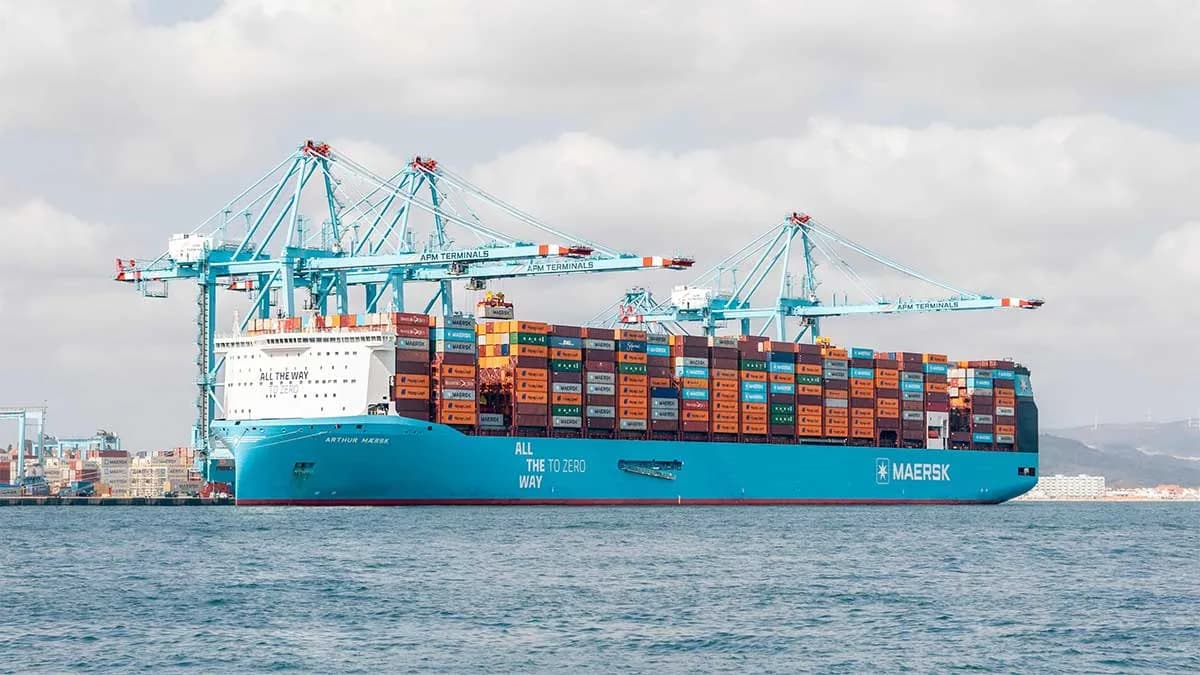
The maritime transport industry, responsible for the consumption of more than 300 million tons of fuel per year and between 3% and 4% of global greenhouse gas emissions, is facing a complex energy transition in which regulatory pressure, price volatility, limited availability of alternative fuels, and uncertainty about the technologies that will prevail converge. The latest data from Lloyd’s Register, Clarksons Research, Drewry Maritime Research, and various industry sources provide a detailed overview of the progress, challenges, and strategies being adopted by major operators.
In regulatory terms, the Net Zero Framework from the International Maritime Organization (IMO) is facing new delays. The vote scheduled for October 2025, which had already postponed by a year the enforcement of a system of fees and mandatory limits on greenhouse gas emissions from 2028, has encountered new obstacles. At the meeting of the Marine Environment Protection Committee (MEPC 84), held at the end of April, governments continued discussions on the draft regulatory framework, but no final agreement was reached. The United States, Russia, Saudi Arabia, and the United Arab Emirates led the opposition, and Washington even requested the cancellation of the meeting scheduled for November. In its latest proposal, the United States suggested that any regulatory framework must avoid economic penalties, carbon taxes, or multilateral funds and must not discriminate between fuel types, including conventional fuels, LNG, and nuclear energy, advocating for what it called an "energy-all" approach.
Despite this regulatory uncertainty, shipowners are investing in cleaner fleets. According to data from Lloyd’s Register based on Clarksons, in 2025 about 590 vessels capable of operating with alternative fuels were contracted, raising the dual-fuel tonnage order book to 1,942 ships. Of that total, 1,259 units (64.8%) are designed for LNG, 385 for methanol, 139 for LPG, 55 for ethanol, 53 for hydrogen, 45 for ammonia, and 22 for biofuels. Additionally, there are four nuclear-powered ships in the portfolio.
In the container sector, considered a leader in the adoption of cleaner fuels, most of the newbuilding contracts of the past three years—especially for vessels over 10,000 TEUs—correspond to dual-fuel designs. Among the most recent orders for 2026 are 8 vessels of 18,600 TEUs with LNG capability for Maersk, 12 units of 18,000 TEUs for China Cosco Shipping, 8 vessels of 11,500 TEUs for MSC, 6 units of 1,700 TEUs for CMA CGM, 6 vessels of 6,000 TEUs for Wan Hai, and 2 of 5,400 TEUs with methanol capability for Danaos Shipping.
According to data from Drewry and Clarksons, the top ten regular liner shipping companies already have significant percentages of dual-fuel vessels in service or on order. Evergreen, Yang Ming, Maersk, and ONE show the highest levels of penetration of alternative fuels in their order books, with percentages above 90%, while CMA CGM, Cosco, Hapag-Lloyd, MSC, ZIM, and HMM have levels ranging from 70% to 100% in their order books.
One of the most relevant developments of the period is Maersk's exploration of ethanol as an alternative to methanol for some of its dual-fuel vessels. The decision responds to the rising price of methanol, limitations in its supply—the majority of green methanol is produced in China—and geopolitical considerations, given that the United States is a major producer of ethanol. In October 2025, Maersk began trials with a 10% ethanol and 90% methanol mix on the feeder ship Laura Maersk (2,100 TEUs), increasing the proportion to 50% in December. The ultimate goal is to operate with 100% ethanol, although a timeline for this has not been set. Emma Mazhari, head of energy markets at Maersk, noted that "ethanol has a proven track record, an established market, and existing infrastructure, offering an additional pathway for decarbonization."
In parallel, Hapag-Lloyd, a partner of Maersk in the Gemini cooperation, is executing a retrofit program for five long-term chartered vessels to Seaspan, converting them from conventional heavy fuel oil to dual-fuel methanol propulsion systems. The first of them, the Seaspan Yangtze (10,100 TEUs, built in 2014), arrived in March at the Cosco Shipping Heavy Industries shipyard in Shanghai for a conversion estimated at around 25 million dollars and three months of work. The work includes upgrading the fuel injection systems, installing new tanks, and establishing a methanol preparation room. Maersk, for its part, is also converting its own vessels, with the Maersk Halifax (15,000 TEUs) already converted in 2024 and ten sister ships pending transformation before the end of 2027.
The supply of alternative fuels in sufficient quantities remains one of the main challenges for shipowners. Wallenius Wilhelmsen recently signed a two-year supply agreement for biomethanol with Equinor, which will produce the fuel at its plants in Norway and transport it to Antwerp and Zeebrugge. The Norwegian shipping company has eight dual-fuel methanol vessels in service and four on order.
Batteries and hydrogen are gaining ground in specific segments. Cosco Shipping has been operating two electric vessels of 700 TEUs on the Yangtze River since late 2023, equipped with an exchangeable battery system housed in 20-foot containers. In Europe, the Norwegian Eitzen Avanti has obtained 200 million crowns (about 20 million dollars) from the Norwegian government’s Enova program to build two vessels of 850 TEUs with batteries capable of storing more than 100 MWh, which would be the largest electric container ships in the world when delivered in 2027-2028. North Sea Container Line will receive this year the Yara Eyde (1,400 TEUs), described as the first container ship to operate with clean ammonia, for its routes between Norway and Germany. In the hydrogen sector, the Dutch company Future Proof Shipping is already operating the barges H2 Barge 1 and H2 Barge 2 in the Antwerp-Rotterdam corridor, while the IMO plans to approve provisional guidelines in May for the safe use of hydrogen as fuel in ships.
Shipowners who do not adopt new technologies and fuels risk having their vessels turned into non-competitive assets due to climate regulation, operating at steep discounts compared to more efficient ships. The European regulatory framework, with the emissions trading system (EU ETS) and the FuelEU Maritime regulation already in force, is turning emissions performance into a direct financial variable for operators, adding pressure on investment decisions, fuel choice, and asset utilization.