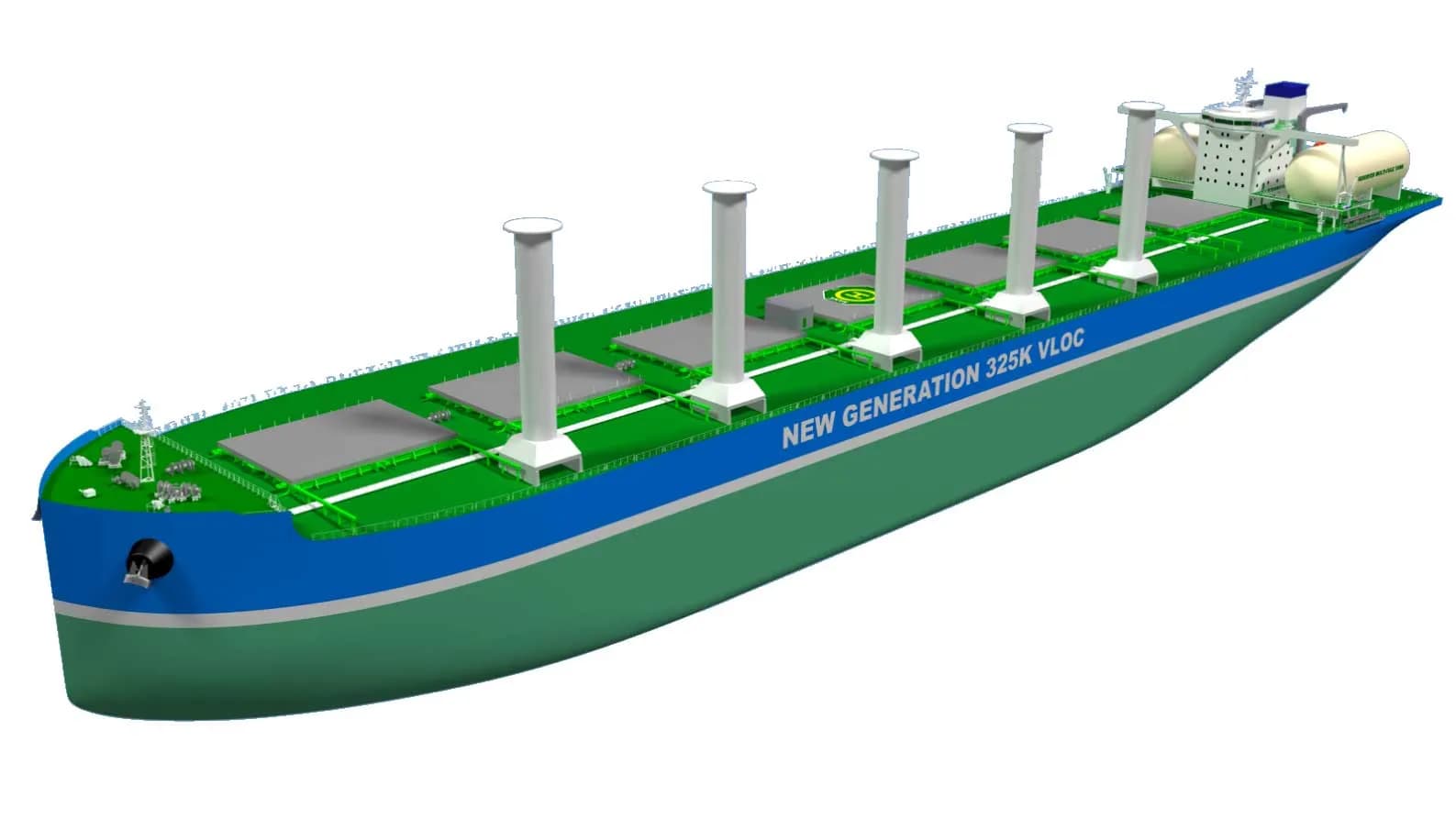
The Swiss marine propulsion company WinGD has received the world's first orders for ethanol engines from the X-DF-M/E platform for ocean-going vessels. The engines will equip two Newcastlemax class ore carriers, each with a deadweight tonnage (DWT) of 325,000 tons, which will be built by the Chinese shipyard Beihai Shipbuilding for the shipowner Shandong Shipping Corporation and will operate under long-term charter contracts with the Brazilian mining company Vale.
Each vessel will be powered by a six-cylinder engine with an 820 millimeter cylinder diameter, model 6X82DF-M/E, designed to primarily run on ethanol as fuel. These are the first engines from the X-DF-M/E platform specifically optimized for the priority use of this alcohol as an energy source. The injection pressure and the fuel supply system have been modified from the methanol engine concept that WinGD already has in service, to adapt to the difference in energy density between the two fuels, which otherwise share very similar combustion properties and characteristics. The contract includes options for additional engine deliveries in case the series of vessels expands.
These first ethanol X-DF-M/E engines are based on more than a decade of intensive research on alcoholic fuels, including ethanol and methanol. Securing orders from a first-tier charterer and operator is the best possible validation of those efforts. It is a clear signal that onboard technology and supply infrastructure around ethanol as a marine fuel are ready, which instills confidence in other stakeholders considering ethanol as an option for maritime decarbonization," says Volkmar Galke, sales director at WinGD.
Ethanol is gaining attention as a marine fuel due to its wide availability and cost competitiveness in various markets, including Brazil, from which vessels will transport iron ore to China. According to research conducted by Vale itself, using ethanol can reduce greenhouse gas emissions by about 90% compared to heavy fuel oil, depending on the type of fuel and the assumptions of the life cycle analysis.
The adoption of ethanol as an alternative fuel is part of Vale's strategy to combine flexibility and efficiency in the vessels that transport our ore, positioning the company uniquely for energy transition in global maritime transport over the coming decades, while also promoting similar initiatives in the sector. We are pleased to partner with Shandong and WinGD on the world's first order for ocean-going vessels powered by ethanol," says Rodrigo Bermelho, maritime transport director at Vale.
With the incorporation of ethanol operation capability into its X-DF-M/E platform, WinGD now offers a fuel flexibility that also encompasses the X-DF-A platform for ammonia and the X-DF-HP for high-pressure LNG, all based on the same engine and injection architecture, allowing for efficient conversion capability without locking shipowners into a single fuel option.
The delivery of the engines is scheduled for early 2029, depending on the shipyard's requirements.